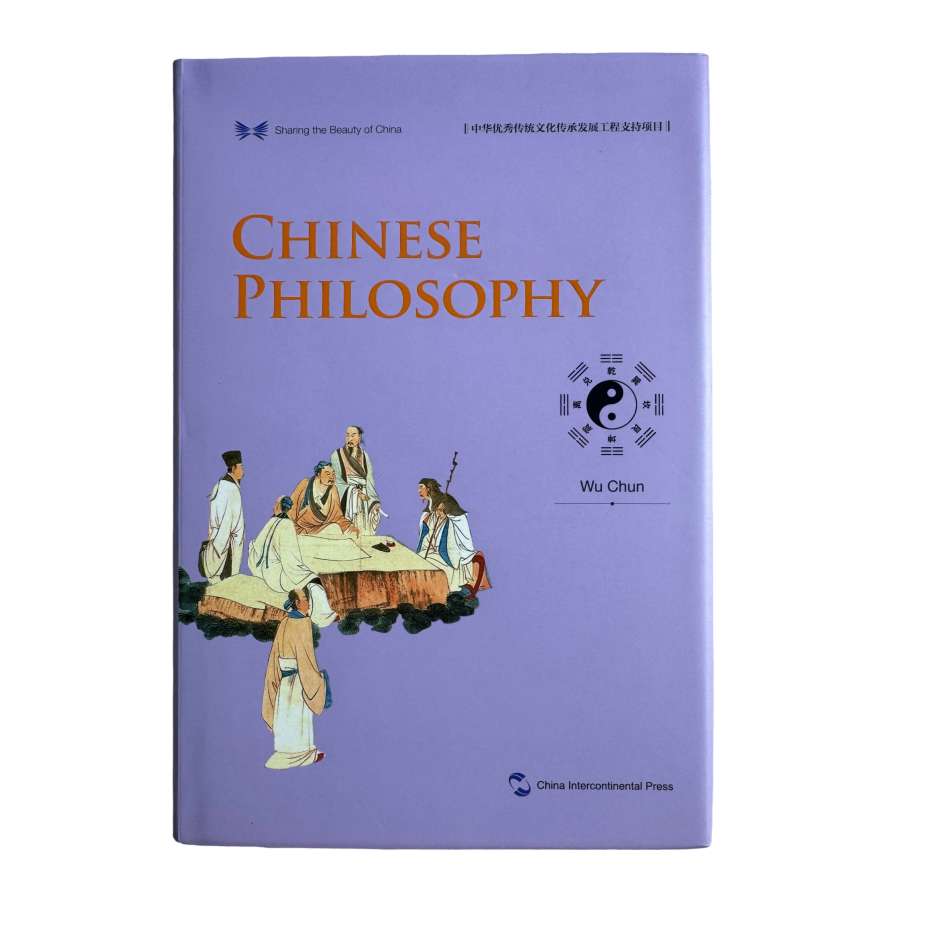
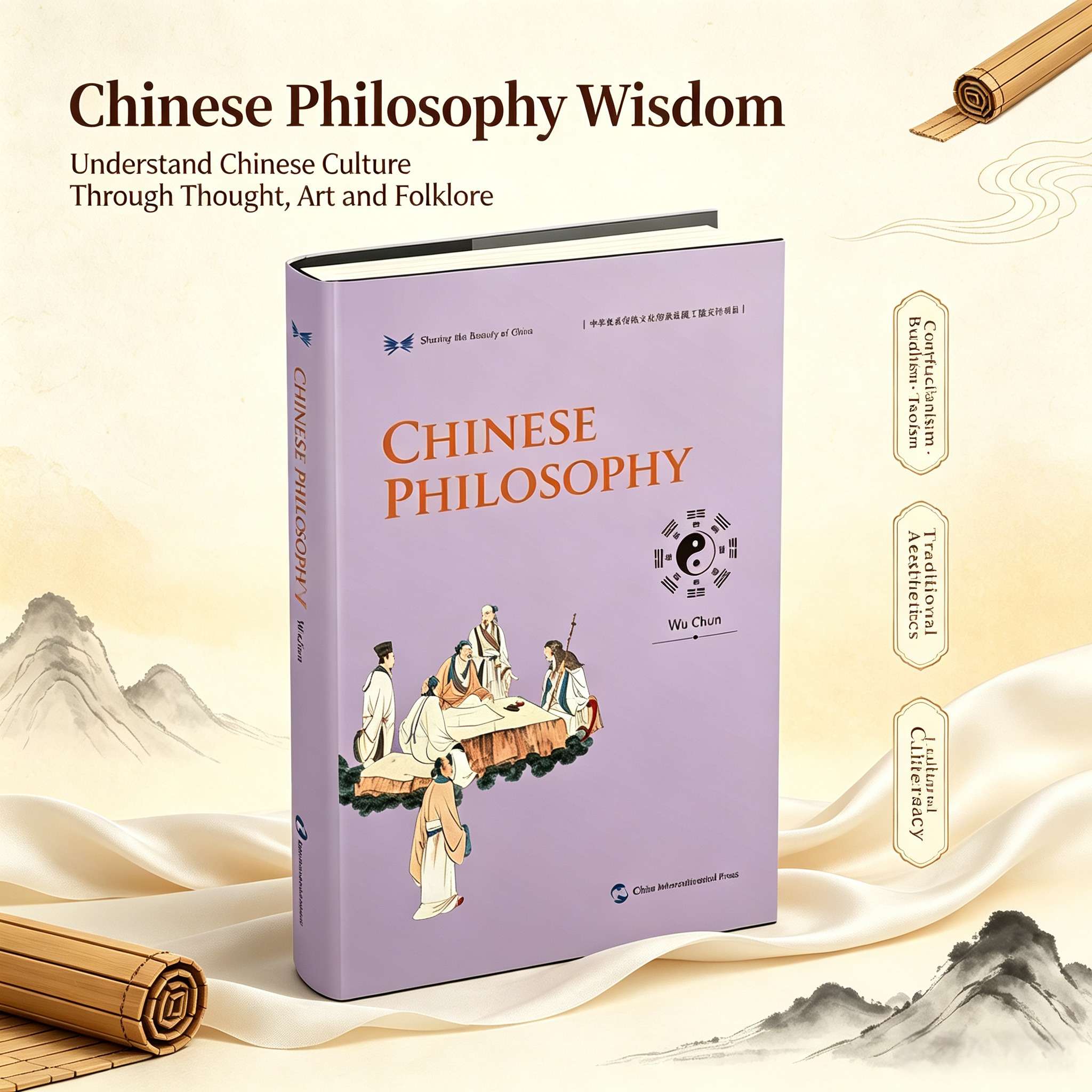
Chinese Philosophy (Sharing the Beauty of China Series) – English Edition by Wu Chun
-
Detail
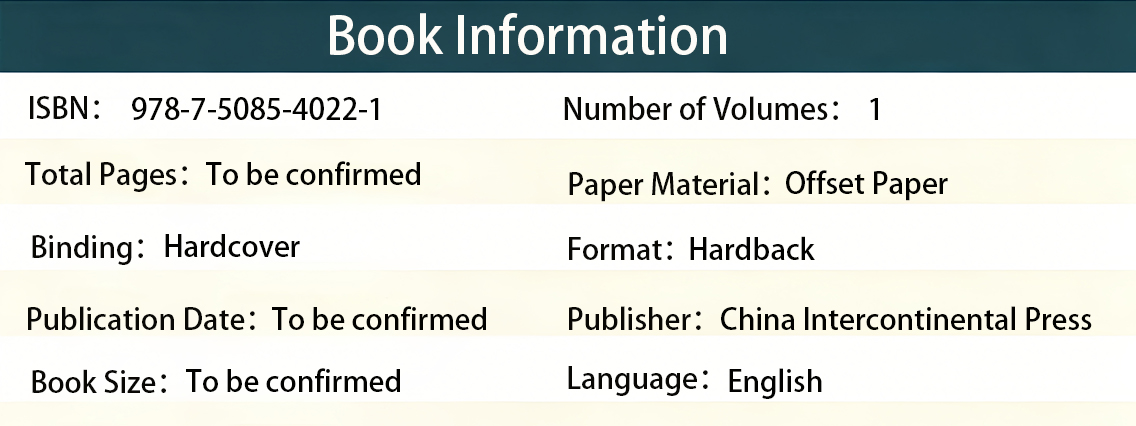
About This Book
Chinese Philosophy is part of the "Sharing the Beauty of China" series – a curated collection of 15 volumes that explore the essence of Chinese traditional culture.-12 Published under the "Outstanding Traditional Chinese Culture Inheritance and Development Project," this volume presents the richness of Chinese philosophical thought to an English-speaking audience.-1
Rather than following a conventional historical timeline, the book is organized around five thematic questions that cut to the heart of Chinese philosophy-13:
-
What is the nature of the world? – The birth of beliefs, the formation of concepts about nature, observation and thinking about phenomena, and the quest for essence and laws.-12
-
What are the relationships between things? – The relationship between Heaven and humanity, dialectical outlook, and the holistic perspective.-12
-
What are the social norms? – Moral consciousness, the establishment of Confucian moral principles, the development of Confucian social norms, and reflections on social issues in other schools of thought.-12
-
What is the proper orientation of life? – The ideal Confucian character and its cultivation, music and character building, the Confucian theory of human nature, and the Taoist outlook on life.-12
-
What is the structure of knowledge? – The source and ability of knowledge, the structure or form of knowledge, and views on knowledge and action.-12
The first two sections explore views on nature and the world; sections three and four address society and human life; and the final section reflects on knowledge and wisdom itself.-13
About the Author
Wu Chun (also known as Wu Jingdong) was born in Shanghai in 1955.-12 He is a professor and doctoral supervisor at the School of Philosophy and Law & Politics at Shanghai Normal University, specializing in the study of Chinese thought and the origins and paradigms of Chinese philosophy.--32 His research spans ancient Chinese science, ethics, religion, and art.- He has published over a hundred academic papers and more than ten books, including The Forms of Chinese Thought, The Scientific Paradigm of Ancient China, and The Ethical Life in Chinese Society.-12-1
Why This Book?
-
Thematic rather than chronological – makes Chinese philosophy accessible and intuitive for Western readers
-
Part of an official Chinese cultural heritage series – authoritative and beautifully produced
-
English translation – perfect for international readers seeking an introduction to Eastern thought
-
Compact yet comprehensive – covers the full spectrum of Chinese philosophy from Confucianism to Taoism
-
-
Customer ReviewsNo comments