


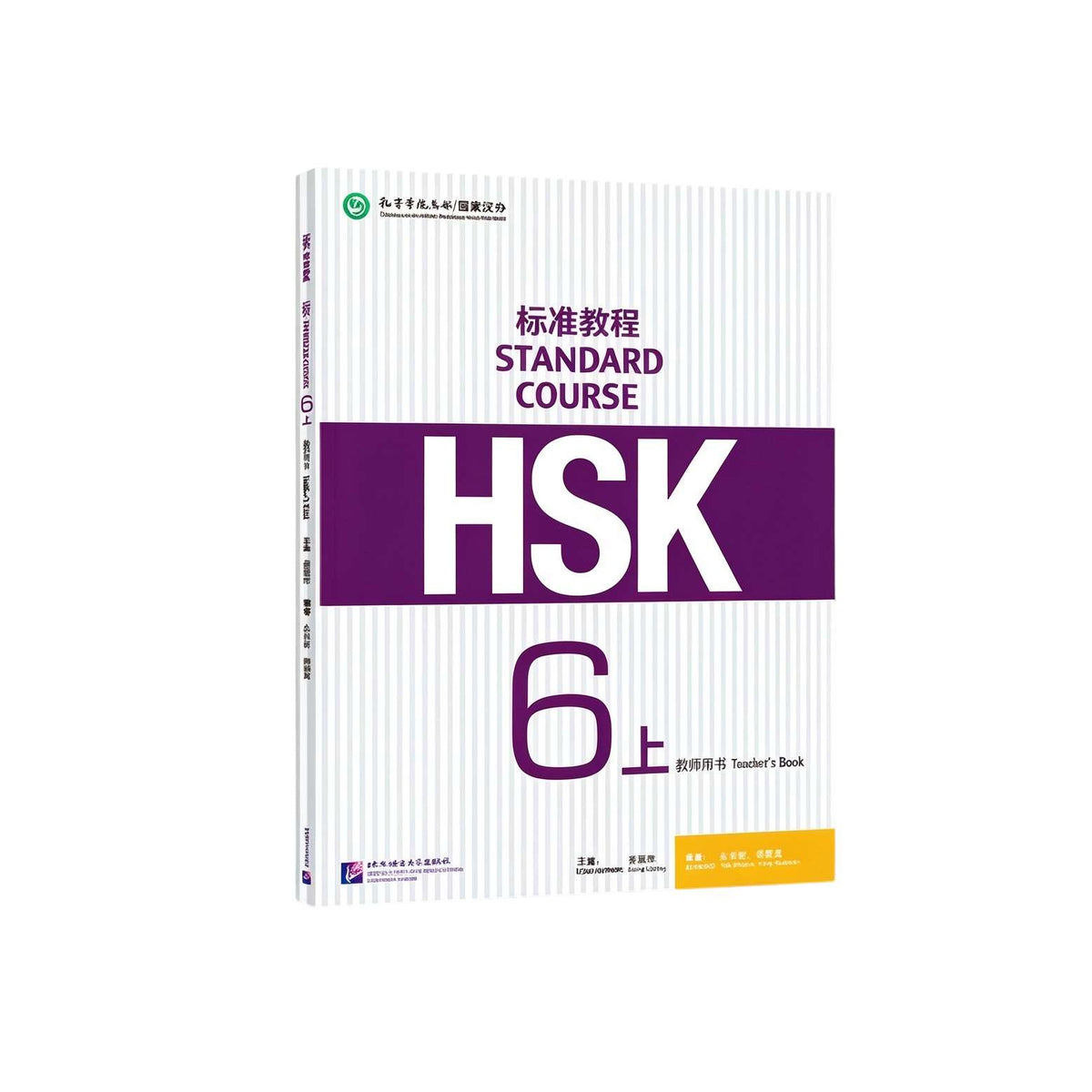
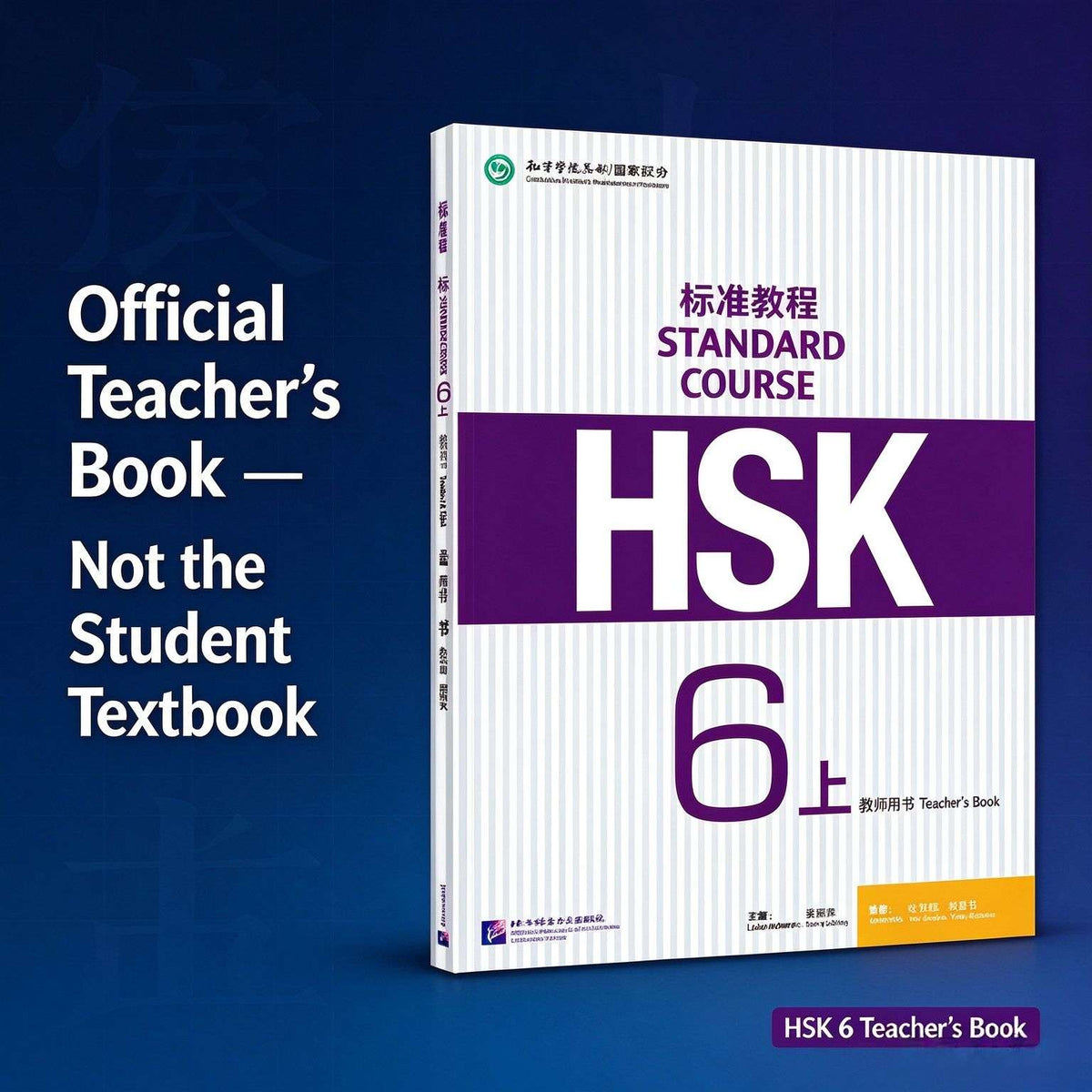
HSK Standard Course 6A Teacher‘s Book | Official HSK 6 Exam Prep Teaching Guide – 20 Complete Lesson Plans & Classroom Steps
HSK Standard Course 6A Teacher‘s Book | Official HSK 6 Exam Prep Teaching Guide – 20 Complete Lesson Plans & Classroom Steps
- 99% Issue-Free
- Secure Checkout
- $10K ID Protect
Security & Service
- Payment
Security - Privacy
Protection - Efficient
Shipping - Customer
Support
Detail
 Who is this book for?
Not for beginners, and not for casual readers. It’s for two kinds of people: Chinese teachers currently teaching HSK 6, and self-studiers who have reached level 6 and want someone to spell out exactly how to work through each lesson properly.
What problem does it solve?
At HSK 6, the hard part isn‘t the language points themselves — it’s turning a long text, a pile of advanced vocabulary, and real exam focus points into classroom steps that students can actually follow. This book does exactly that: for each lesson, it first states the instructional objectives, then walks through the teaching steps one by one, adds classroom activity suggestions and guidance on handling the exercises, and closes with an “afterword” that helps you look back and check whether the key points of the lesson actually landed. All 20 lessons, none skipped.-15
It also targets the place where HSK 6 learners most often get stuck: new words built from characters they’ve already “learned.” Each lesson picks one Chinese character and teaches the form–sound–meaning relationship in depth, with plenty of examples and exercises so students understand each character in context rather than memorizing isolated vocabulary lists.-15
Why trust it?
This series is authorized by Hanban and developed jointly by Beijing Language and Culture University Press and Chinese Testing International (CTI). It uses past HSK test papers as its primary source and matches the HSK exam in content, form, and levels — the design philosophy is “combining testing and teaching, and promoting learning and teaching by testing”. The author, Professor Jiang Liping, is a postgraduate tutor at Beijing Language and Culture University whose research focuses on teaching Chinese as a foreign language, teaching methodology, and textbook study, with lecturing experience in Japan, the US, Thailand, Hong Kong, and beyond. What you‘re getting is not a collection of teaching tips — it’s an official companion teacher‘s book backed by exam alignment and teaching methodology.-15
How to get the most out of it?
Use it alongside the HSK Standard Course 6A student’s book, budgeting 6–8 class hours per lesson. If you‘re a self-studier without a real classroom, treat the “teaching steps” as your study workflow: check the objectives first, then follow the steps through the text, do the exercises, review the answer guidance, and finish with the afterword as a self-check. It plays the role of an experienced teacher telling you where to put your next foot


-
101 Stories for Foreigners to Understand Chinese People (English Edition): Real-Life Lessons on Culture, Etiquette & Getting It Right
Regular price £21.80Regular price£31.00Sale price £21.80DEAL -

24 Solar Terms (English-Chinese Edition): 24 Art Postcards Where Chinese Characters Come to Life
Regular price £19.70Regular price£28.00Sale price £19.70DEAL -
24 Solar Terms Fairy Tale (English-Chinese Edition): A Little Prince‘s Journey Through the Four Seasons
Regular price £18.30Regular price£26.00Sale price £18.30DEAL -
300 Song Lyrics (Chinese-English Edition): Xu Yuanchong’s Translation of Classic Ci Poetry
Regular price £21.80Regular price£30.90Sale price £21.80DEAL -
300 Tang Poems (Chinese-English Edition): Xu Yuanchong’s Rhymed Translation of the Golden Age
Regular price £21.00Regular price£30.00Sale price £21.00DEAL -
300 Yuan Songs (Chinese-English Edition): Xu Yuanchong‘s Translation of Classic Sanqu Poetry
Regular price £21.40Regular price£30.50Sale price £21.40DEAL -
80000 Words English-Chinese / English-English / Chinese-English Dictionary (Two-Color Edition): A Three-in-One Reference for Learners
Regular price £23.40Regular price£33.50Sale price £23.40DEAL -
A Bing Xin Reader (English Edition): Letters to Young Readers & The Little Orange Lamp
Regular price £21.90Regular price£35.00Sale price £21.90DEAL -

A Biography of Xuanzang (English-Chinese Edition): The Monk Who Walked to India, in Ten Scrolls
Regular price £23.50Regular price£34.00Sale price £23.50DEAL -
A Brief Introduction to the Belt and Road Initiative (English Edition): 111 Questions Answered in Plain English
Regular price £25.00Regular price£0.00Sale price £25.00


