


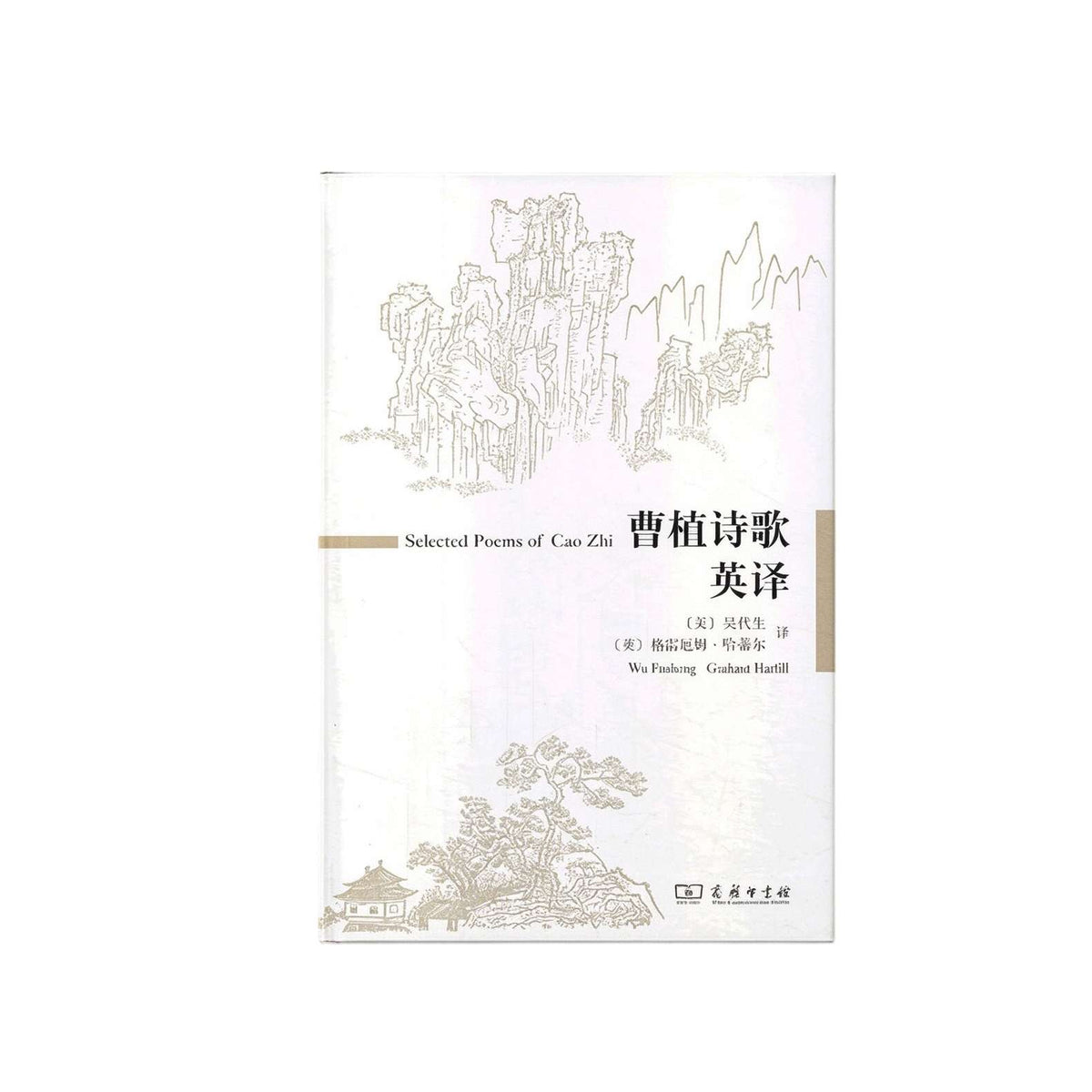
Selected Poems of Cao Zhi (English-Chinese Edition): 61 Poems Translated by a Scholar & a Poet
Selected Poems of Cao Zhi (English-Chinese Edition): 61 Poems Translated by a Scholar & a Poet
- 99% Issue-Free
- Secure Checkout
- $10K ID Protect
Security & Service
- Payment
Security - Privacy
Protection - Efficient
Shipping - Customer
Support
Detail

He lived only 40 years. His words have echoed through China for 2,000.
You may not know the name Cao Zhi. But you may know this:
“We were born of the same root—why burn with such haste to destroy each other?“
Those lines come from Cao Zhi’s Seven Steps Poem. The story behind it is brutal: Cao Zhi‘s elder brother, Emperor Cao Pi, ordered him to compose a poem in the time it took to walk seven steps—or die. Cao Zhi walked seven steps and wrote the poem. His brother let him live.-
It may be the most famous “prompt” in Chinese history. But Cao Zhi was far more than one poem. Known as the “peerless talent of the Jian’an era,” he was the brightest literary star of China‘s Three Kingdoms period. For Western readers: think of him as China’s Shakespeare—the greatest poet of his age, and a name that Chinese literature has never been able to move past.
What‘s inside?
This book collects 61 of Cao Zhi’s poems, arranged chronologically from his early confidence to his later melancholy.-You‘ll find:
-
The hero’s dream: The White Horse tells of a young knight who longs to ride to battle and die for his country. The passion still feels immediate after two millennia.
-
Love for friends: To Wang Can and To Ding Yi were written for exiled friends. Every line says: “I know you’re suffering. So am I.” No formalities.
-
Loneliness and defiance: Cao Zhi spent his later years under his brother‘s suspicion, pushed out of court. His late poems carry a compressed fury—the voice of a man trapped, talking to himself at night.
Why this edition?
Many English translations of classical Chinese poetry fall into two traps: too academic (reads like a dissertation) or too loose (beautiful English, but far from the original).
This edition has a translator pairing worth noting: Wu Fusheng is a professor of Chinese and comparative literature at the University of Utah, with a PhD in comparative literature from Brown. Graham Hartill is a British poet.-A scholar who knows classical Chinese deeply, paired with a poet who writes poetry. The result is both accurate and alive.
The translators’ approach: direct translation where possible, transliteration when necessary, explanatory phrasing woven into the text when a cultural reference needs it.-They abandoned forced rhyme in favor of free verse, aiming to reproduce the narrative and emotional effect of the originals rather than sacrificing meaning for form.-
In short: you don‘t need to read Chinese to understand what these poems are saying. And if you do read a little Chinese, the bilingual layout lets you compare—and see how the translation works.
Who is this for?
-
Readers curious about Chinese culture but unsure where to start: Cao Zhi is a good entry point—his poems are concise, emotional, and deal in universal themes: love, friendship, ambition, loss, resentment.
-
Chinese language learners: Bilingual format. Use it for reading practice or as a translation reference.
-
Poetry lovers: If you enjoy poetry but want to move beyond the English-speaking world, Cao Zhi offers a completely different aesthetic.
-
As a gift: Published by The Commercial Press, China’s oldest academic publisher, this edition is well-made and handsome—a thoughtful gift for anyone interested in Chinese culture.


-
101 Stories for Foreigners to Understand Chinese People (English Edition): Real-Life Lessons on Culture, Etiquette & Getting It Right
Regular price £21.80Regular price£31.00Sale price £21.80DEAL -

24 Solar Terms (English-Chinese Edition): 24 Art Postcards Where Chinese Characters Come to Life
Regular price £19.70Regular price£28.00Sale price £19.70DEAL -
24 Solar Terms Fairy Tale (English-Chinese Edition): A Little Prince‘s Journey Through the Four Seasons
Regular price £18.30Regular price£26.00Sale price £18.30DEAL -
300 Song Lyrics (Chinese-English Edition): Xu Yuanchong’s Translation of Classic Ci Poetry
Regular price £21.80Regular price£30.90Sale price £21.80DEAL -
300 Tang Poems (Chinese-English Edition): Xu Yuanchong’s Rhymed Translation of the Golden Age
Regular price £21.00Regular price£30.00Sale price £21.00DEAL -
300 Yuan Songs (Chinese-English Edition): Xu Yuanchong‘s Translation of Classic Sanqu Poetry
Regular price £21.40Regular price£30.50Sale price £21.40DEAL -
80000 Words English-Chinese / English-English / Chinese-English Dictionary (Two-Color Edition): A Three-in-One Reference for Learners
Regular price £23.40Regular price£33.50Sale price £23.40DEAL -
A Bing Xin Reader (English Edition): Letters to Young Readers & The Little Orange Lamp
Regular price £21.90Regular price£35.00Sale price £21.90DEAL -

A Biography of Xuanzang (English-Chinese Edition): The Monk Who Walked to India, in Ten Scrolls
Regular price £23.50Regular price£34.00Sale price £23.50DEAL -
A Brief Introduction to the Belt and Road Initiative (English Edition): 111 Questions Answered in Plain English
Regular price £25.00Regular price£0.00Sale price £25.00


