


Speak Korean If You Know Chinese (Full-Color Illustrated Edition): A Pronunciation Guide for Absolute Beginners
Speak Korean If You Know Chinese (Full-Color Illustrated Edition): A Pronunciation Guide for Absolute Beginners
189 in stock
- 99% Issue-Free
- Secure Checkout
- $10K ID Protect
Security & Service
- Payment
Security - Privacy
Protection - Efficient
Shipping - Customer
Support
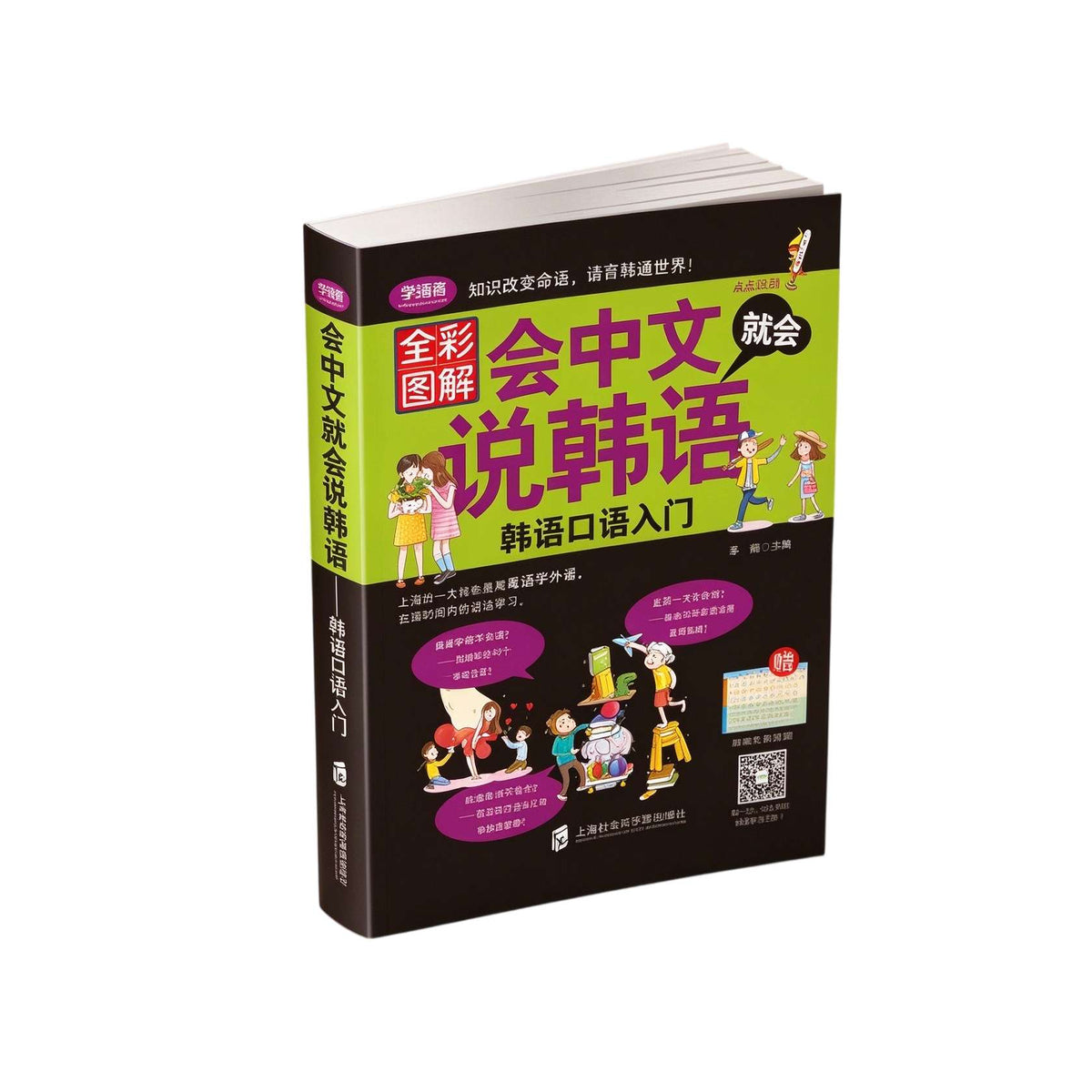
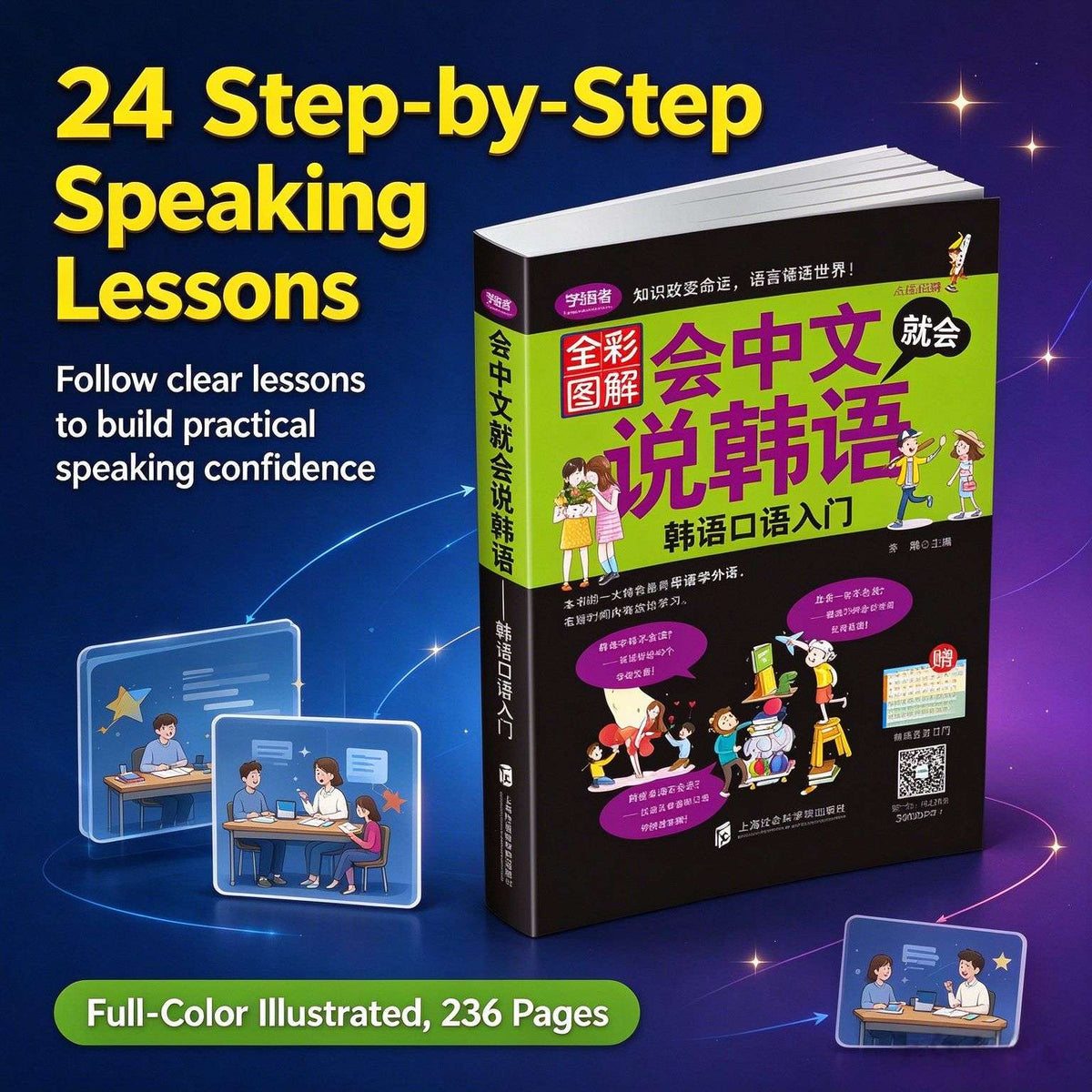
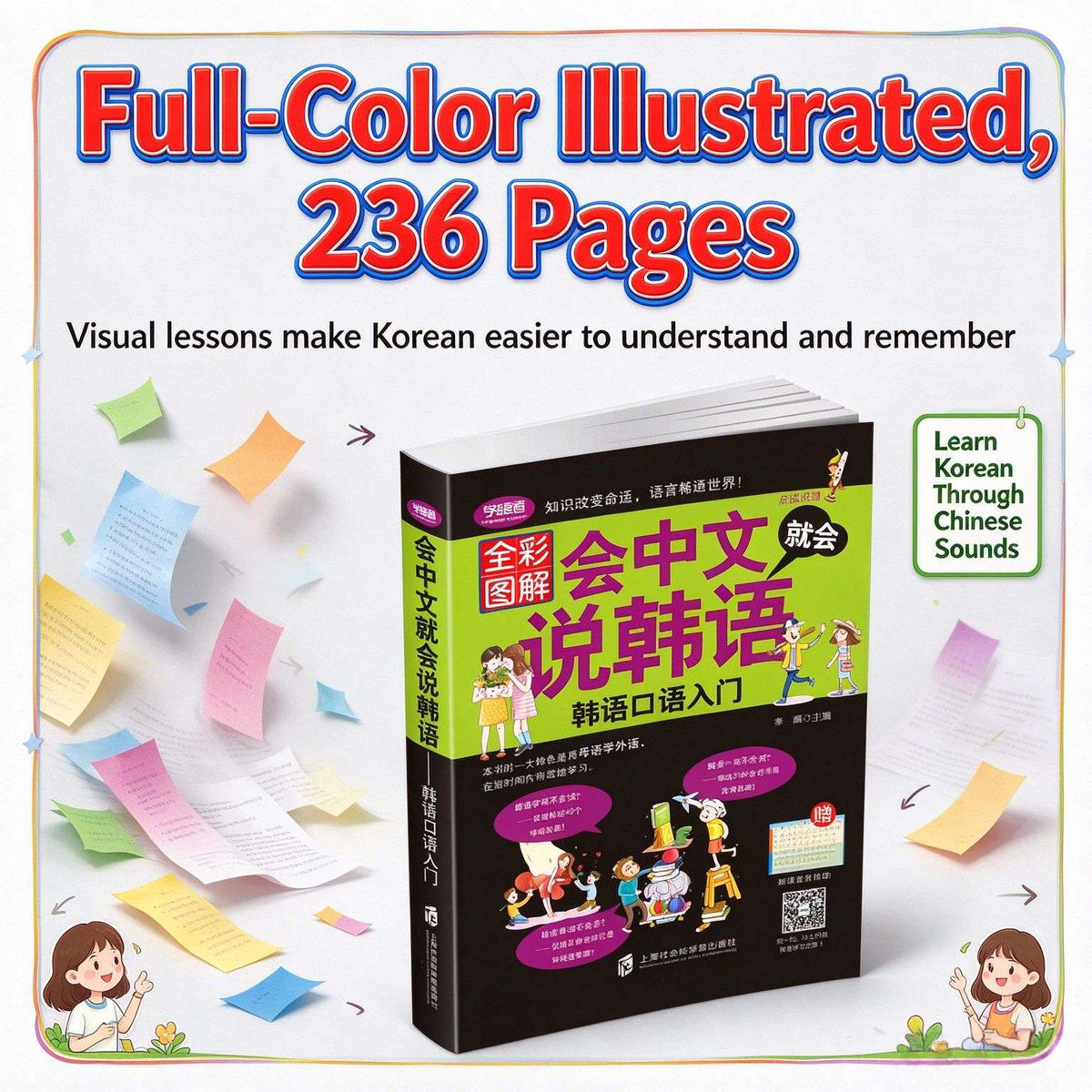
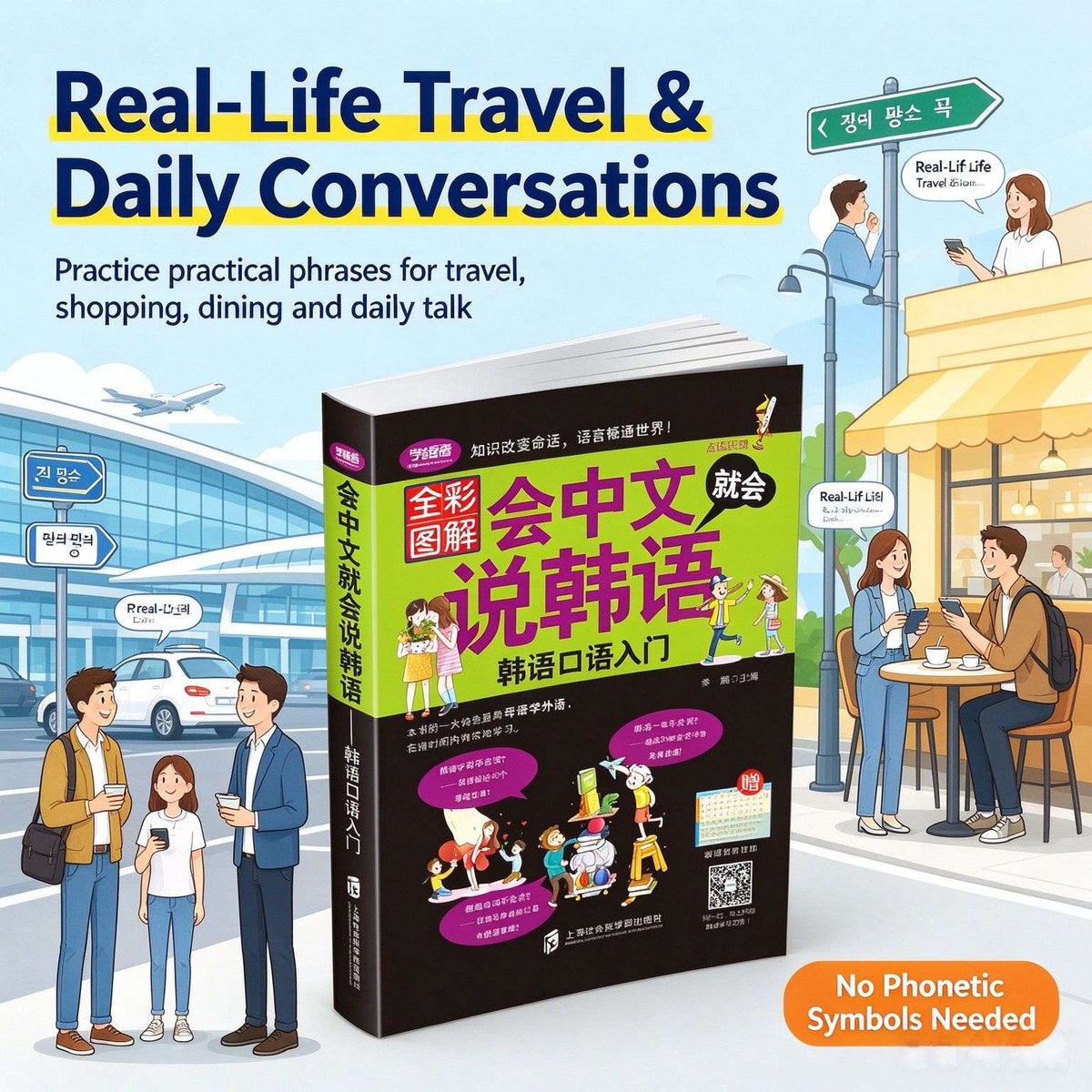
Detail

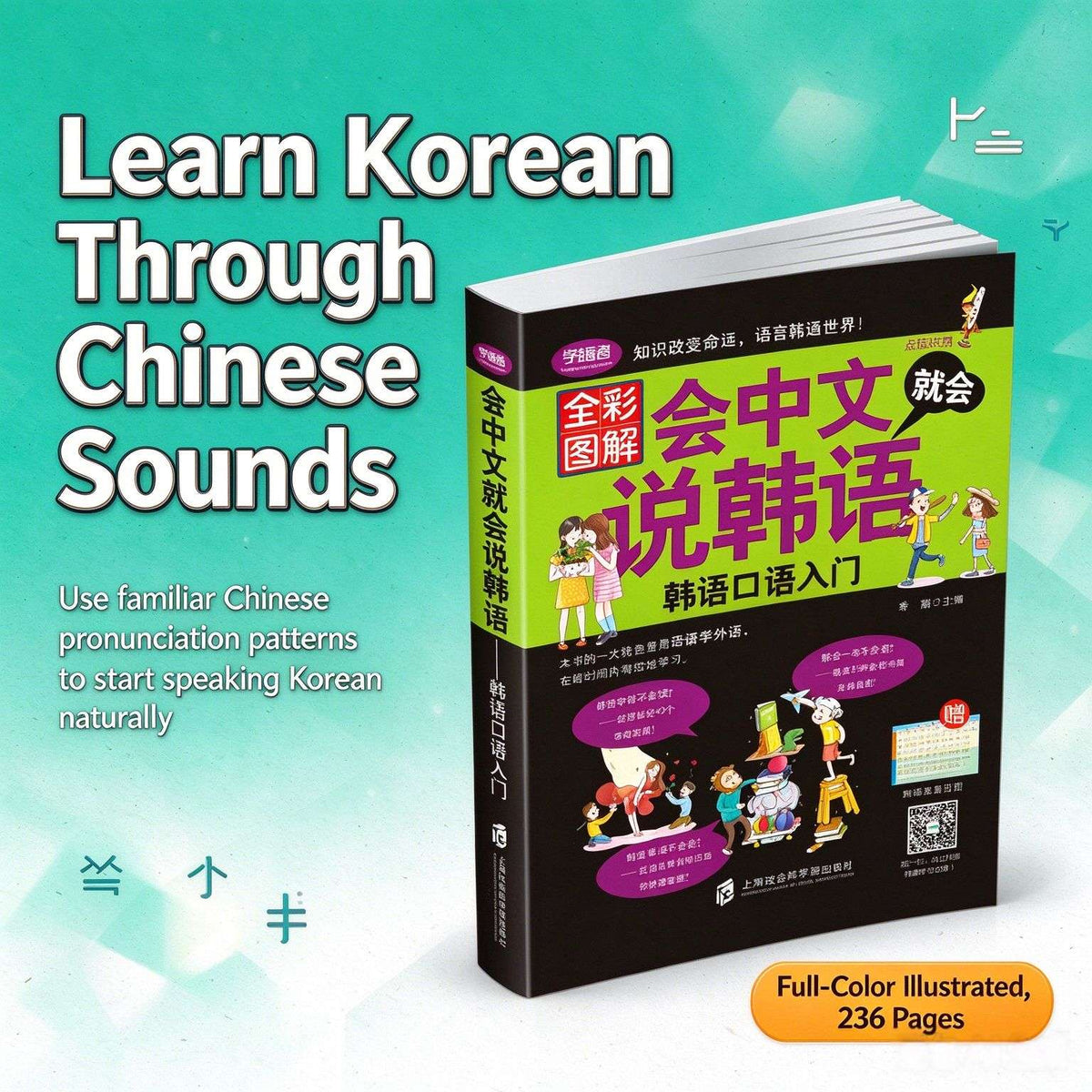
What problem does this book solve?
Most people who want to learn Korean quit at step one: pronunciation. Korean has its own writing system (Hangul), and the rules for combining consonants and vowels look like a foreign code to anyone who has never encountered them. Most textbooks assume you will spend weeks or months on pronunciation drills before you can say a single word. That is where people give up.
This book takes a different approach: You do not need to build a new pronunciation system from scratch. You just need to map the Chinese sounds you already have onto Korean.
The author's logic is simple: many Korean sounds have close counterparts in Mandarin Chinese. Certain Korean consonants are articulated in nearly the same position as certain Chinese initials. The entire book is built around this core idea — use what you already know to unlock what you do not.
How is the book structured?
Three parts, building on each other:
Part 1: The Sound System (Chapters 1–8). From single vowels to diphthongs to consonants, one small group at a time. Each sound group comes with a Chinese pronunciation analogy so you immediately know “this sounds roughly like this in Chinese.”-40
Part 2: Final Consonants and Sound Changes. The hardest part of Korean pronunciation is actually batchim (final consonants) and the linking and assimilation rules. This section uses the same analogy approach to help you understand the patterns, not memorize them blindly.-40
Part 3: Real-Life Application. Pronunciation is not the destination. This part puts vocabulary, grammar, and sentences into actual daily scenarios — life in Korea, ordering food, asking directions, shopping, and more. Each chapter ends with a Korean culture tip, so you understand not just what to say but why Koreans say it that way.-1
Who is this for?
-
Complete beginners with zero Korean. If you have never seen Hangul before, this is your starting point.
-
People who tried other textbooks and quit at pronunciation. If you have stalled on Korean pronunciation more than three times, try a different angle.
-
Anyone who needs practical Korean fast. If you are traveling to Korea soon, staying short-term, or want to understand simple K-drama dialogue, the conversation sections are directly usable.
-
K-pop and K-drama fans who want to "pick up some Korean along the way." No pressure to sit down and study formally. Open to any chapter, start anywhere.


-
101 Stories for Foreigners to Understand Chinese People (English Edition): Real-Life Lessons on Culture, Etiquette & Getting It Right
Regular price $21.80Regular price$31.00Sale price $21.80DEAL -

24 Solar Terms (English-Chinese Edition): 24 Art Postcards Where Chinese Characters Come to Life
Regular price $19.70Regular price$28.00Sale price $19.70DEAL -
24 Solar Terms Fairy Tale (English-Chinese Edition): A Little Prince‘s Journey Through the Four Seasons
Regular price $18.30Regular price$26.00Sale price $18.30DEAL -
300 Song Lyrics (Chinese-English Edition): Xu Yuanchong’s Translation of Classic Ci Poetry
Regular price $21.80Regular price$30.90Sale price $21.80DEAL -
300 Tang Poems (Chinese-English Edition): Xu Yuanchong’s Rhymed Translation of the Golden Age
Regular price $21.00Regular price$30.00Sale price $21.00DEAL -
300 Yuan Songs (Chinese-English Edition): Xu Yuanchong‘s Translation of Classic Sanqu Poetry
Regular price $21.40Regular price$30.50Sale price $21.40DEAL -
80000 Words English-Chinese / English-English / Chinese-English Dictionary (Two-Color Edition): A Three-in-One Reference for Learners
Regular price $23.40Regular price$33.50Sale price $23.40DEAL -
A Bing Xin Reader (English Edition): Letters to Young Readers & The Little Orange Lamp
Regular price $21.90Regular price$35.00Sale price $21.90DEAL -

A Biography of Xuanzang (English-Chinese Edition): The Monk Who Walked to India, in Ten Scrolls
Regular price $23.50Regular price$34.00Sale price $23.50DEAL -
A Brief Introduction to the Belt and Road Initiative (English Edition): 111 Questions Answered in Plain English
Regular price $25.00Regular price$0.00Sale price $25.00


