


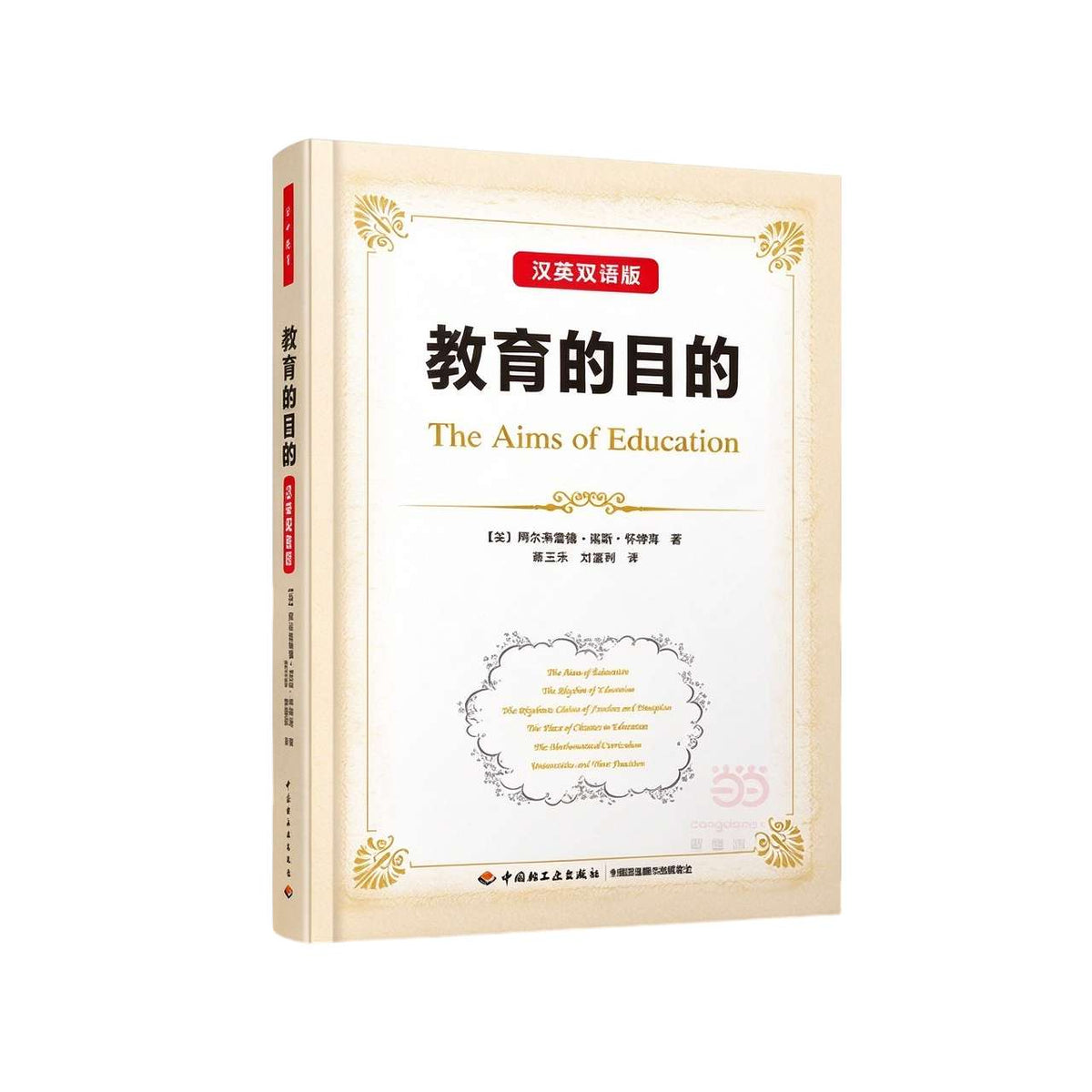
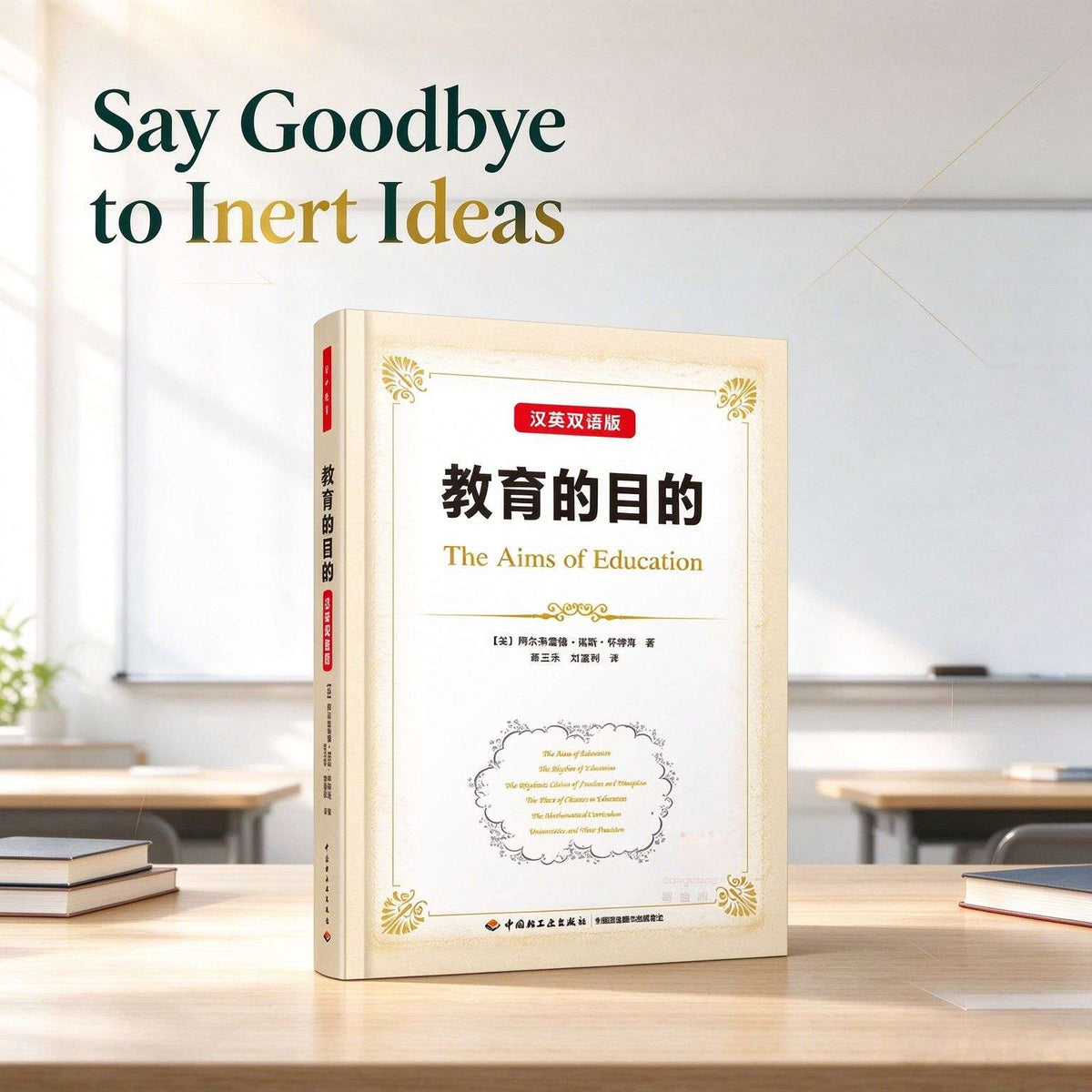
The Aims of Education (English-Chinese Edition): Whitehead‘s Classic on Self-Development & Living Thought
The Aims of Education (English-Chinese Edition): Whitehead‘s Classic on Self-Development & Living Thought
- 99% Issue-Free
- Secure Checkout
- $10K ID Protect
Security & Service
- Payment
Security - Privacy
Protection - Efficient
Shipping - Customer
Support
Detail

Have you ever wondered why kids memorize so much but can't apply it? Why years of English study still leave people unable to speak? Why high exam scores don't necessarily mean real understanding?
Alfred North Whitehead answered this question a century ago. A British mathematician, philosopher, and one of the most influential educational thinkers of the 20th century, Whitehead collected his 1921–1928 lectures on education into The Aims of Education. It's a short book, but every page carries weight.
His most famous critique: the greatest enemy of education is "inert ideas" — knowledge that is memorized but never used, facts stored as isolated fragments. As one reader put it, it's like giving a child a box of parts but never teaching them how to build a machine-.
Whitehead's antidote is "the rhythm of education." Learning has natural stages — romance (curiosity and exploration), precision (discipline and exactness), and generalization (synthesis and application). Good education isn't about force-feeding knowledge; it's about doing the right thing at the right stage-.
The book also tackles deeply practical questions: How do freedom and discipline balance each other? Are technical education and liberal education opposites? What is university actually for? These discussions feel as relevant today as they did in 1929.
Who is this bilingual edition for?
-
Teachers — Whitehead's "rhythm of education" will reshape how you design your classroom.
-
Parents — you'll see what "the best education for your child" actually looks like.
-
Self-learners — this book will help you find a more effective way to learn anything.
-
Anyone in education — this is a classic you can't afford to skip.


-
101 Stories for Foreigners to Understand Chinese People (English Edition): Real-Life Lessons on Culture, Etiquette & Getting It Right
Regular price £21.80Regular price£31.00Sale price £21.80DEAL -

24 Solar Terms (English-Chinese Edition): 24 Art Postcards Where Chinese Characters Come to Life
Regular price £19.70Regular price£28.00Sale price £19.70DEAL -
24 Solar Terms Fairy Tale (English-Chinese Edition): A Little Prince‘s Journey Through the Four Seasons
Regular price £18.30Regular price£26.00Sale price £18.30DEAL -
300 Song Lyrics (Chinese-English Edition): Xu Yuanchong’s Translation of Classic Ci Poetry
Regular price £21.80Regular price£30.90Sale price £21.80DEAL -
300 Tang Poems (Chinese-English Edition): Xu Yuanchong’s Rhymed Translation of the Golden Age
Regular price £21.00Regular price£30.00Sale price £21.00DEAL -
300 Yuan Songs (Chinese-English Edition): Xu Yuanchong‘s Translation of Classic Sanqu Poetry
Regular price £21.40Regular price£30.50Sale price £21.40DEAL -
80000 Words English-Chinese / English-English / Chinese-English Dictionary (Two-Color Edition): A Three-in-One Reference for Learners
Regular price £23.40Regular price£33.50Sale price £23.40DEAL -
A Bing Xin Reader (English Edition): Letters to Young Readers & The Little Orange Lamp
Regular price £21.90Regular price£35.00Sale price £21.90DEAL -

A Biography of Xuanzang (English-Chinese Edition): The Monk Who Walked to India, in Ten Scrolls
Regular price £23.50Regular price£34.00Sale price £23.50DEAL -
A Brief Introduction to the Belt and Road Initiative (English Edition): 111 Questions Answered in Plain English
Regular price £25.00Regular price£0.00Sale price £25.00


